Most sellers walk into a Marietta closing assuming two safety nets exist. One: a termite letter is a state-mandated step that has to clear before anyone signs anything. Two: a disclosure form means somebody, somewhere, is checking the house for problems on the buyer's behalf. Neither assumption is quite true, and the gap between what people expect and what Georgia law actually requires is where a surprising number of Cobb County deals get bumpy in the final two weeks.
Here's the part that catches people off guard first.
The termite letter isn't actually required anymore
For decades, Georgia's standard real estate contract listed the Official Georgia Wood Infestation Inspection Report, known informally as the termite letter or Form 100, as a required condition of closing. Lenders leaned on it because it was baked into the printed contract. Then the Georgia Association of Realtors quietly pulled that requirement out of the standard contract, and the whole practice shifted from mandatory to optional almost overnight. As one GAR official put it at the time, a Georgia closing can proceed without a termite letter and the lender simply does not care.
That does not mean the letter stopped mattering. It means it turned into a negotiated line item instead of an automatic step, and whether it happens at all now depends on what buyer and seller write into the contract, not on state law.
"It's not a matter of if you get termites, it's just a matter of when."
That is a line Atlanta-area pest professionals repeat often enough that it has become local shorthand, and it explains why the letter survives as a near-universal practice even without a legal mandate behind it. Georgia carries some of the highest termite pressure in the country because of its humid climate and clay soil, and homeowners insurance almost never covers termite damage. Skipping the report to save fifty to two hundred and fifty dollars is a real gamble against a repair bill that can run into the thousands.
When a WDIR does happen, it comes with rules worth knowing. The inspection has to be performed within 30 days of closing, and the report itself expires 30 days after it's signed. If closing slips past that window, a fresh report is required. If an active infestation turns up, the issuing pest company is responsible for treating it, then reinspecting and issuing a new Form 100 once treatment is complete.
What the letter checks, and what it quietly skips
The termite letter and the home inspection are not the same document, and confusing the two is how gaps get missed.
| Official Georgia WDIR (Form 100) | Standard home inspection | |
|---|---|---|
| Covers | Subterranean termites, powder post beetles, wood boring beetles, drywood termites, wood decaying fungi | Roof, HVAC, electrical, plumbing, structure, grading, and general condition |
| Does not cover | Mold and mildew generally, structural integrity, cockroaches, rodents, other general pests | Wood-destroying organism identification |
| Valid for | 30 days from signing | No expiration, but conditions can change |
| Who typically pays | Set by the purchase agreement, not by law | Set by the purchase agreement, not by law |
Buyers sometimes assume a transferable termite bond covers all of this. It doesn't. A bond from the seller's pest control company usually addresses subterranean termites specifically. It typically has nothing to say about powder post beetles, wood boring beetles, drywood termites, or wood decaying fungus, and it doesn't flag conducive conditions like wood-to-soil contact that can invite a future problem. A bond is a warranty on one organism, not a clearance on the house.
What Marietta's inspectors keep finding, house after house
Marietta's housing stock is genuinely mixed within a few square miles. A 1920s bungalow near Marietta Square sits a short drive from a 1970s ranch in Whitlock Heights, a traditional two-story in East Cobb, and new construction going up in Sope Creek. That variety shows up directly in what local inspectors report.
A few patterns come up again and again in Cobb County inspections:
- Negative grading. Marietta's red clay soil creates drainage challenges, and soil sloping toward the foundation instead of away from it is one of the most common findings inspectors log. It's usually a cheaper fix than the structural repair it can eventually cause.
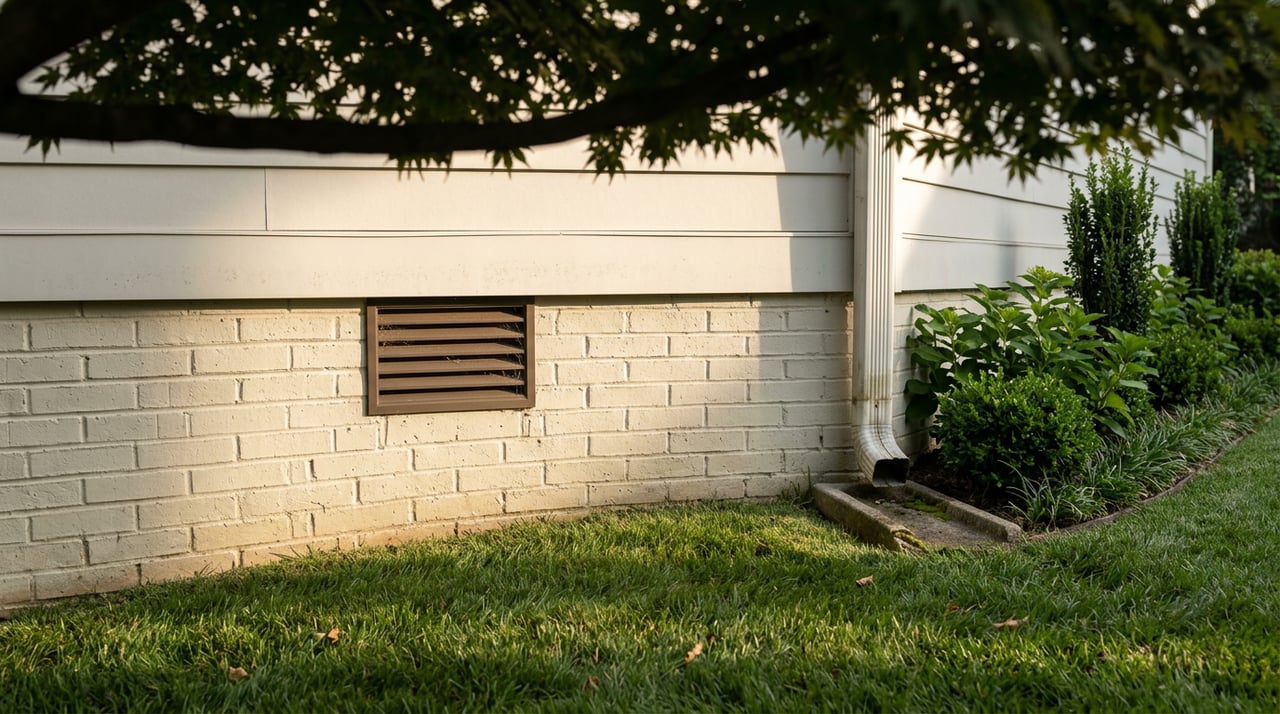
- Crawl space moisture. Poor grading, inadequate ventilation, and Georgia's rainfall pattern combine to make crawl space dampness one of the most frequent flags on a Marietta report.
- Tree canopy effects. The same mature trees that make Marietta's neighborhoods desirable also accelerate roof wear where limbs contact shingles, and tree roots regularly infiltrate aging sewer lines in established neighborhoods.
- Age-related systems in older Cobb homes. Knob-and-tube wiring, cast iron drains, and asbestos siding still turn up in pre-1960s housing stock around the Square and West Cobb.
- Roof, drainage, and HVAC wear even in newer East Cobb homes. Fewer age-related concerns don't mean no concerns. Roofing, drainage, and cooling systems still show up as inspection items in newer subdivisions too.
None of this is a reason to walk away from a Marietta house. It's a reason to know the cost and the timeline before you're negotiating it under contract pressure.
The disclosure standard nobody explains clearly enough
Here's where the paperwork confusion compounds. Georgia is a caveat emptor, or buyer-beware, state. That means there is no state law requiring a seller to fill out a comprehensive disclosure form. The Georgia Association of Realtors publishes a standard Seller's Property Disclosure Statement, and most agents use it, but completing it is voluntary rather than mandatory under state statute.
What is not voluntary is the underlying duty. Georgia law still requires a seller to disclose known latent material defects, meaning problems the seller is aware of that a buyer would not discover through a reasonably diligent inspection. That distinction matters because a seller who skips the disclosure form entirely has not escaped liability. If a defect was known and hidden, a buyer can still pursue a claim for misrepresentation after closing.
For a Marietta seller, the practical read is this. A clean-looking file with no disclosure form and no termite letter does not mean a clean transaction. It means less documentation exists to protect you if something known surfaces later. The paperwork that feels optional is often the paperwork that would have protected you.
What this means if you're listing in Marietta right now
As of July 2026, Marietta sits in a market that leans toward sellers without being overheated. There were 94 active listings against 49 homes already under contract, a pending-to-active ratio of about 0.52, with a median sold price of $480,000 across the trailing six months and a median asking price of $482,450 on current listings. Over the three months ending in May 2026, the median sale price came in at $475,000, up 4.3 percent year over year, with homes selling in an average of 48 days and drawing about three offers apiece.
Read together, those numbers describe a market where good listings still move, but buyers have enough leverage to ask real questions during their due diligence period. Three competitive offers means three sets of eyes reading the inspection report closely. That is exactly the environment where a known but undisclosed issue, or a skipped termite letter, turns into renegotiated terms instead of a clean close.
A practical sequence for a Marietta seller heading toward listing:
- Get ahead of the predictable findings. Check grading, crawl space ventilation, and roof condition before a buyer's inspector does.
- Decide upfront whether you'll order the termite letter and who pays for it, rather than leaving it as a last-minute negotiation.
- Write down every known defect you're aware of, whether or not you use the formal disclosure statement, so there's a record if a question comes up later.
- Price against the trailing six-month closed comps, not against what's currently asking, since the gap between list and sold price is usually a signal about inventory mix rather than a market shift.
A few questions worth answering directly
Do I have to get a termite letter to sell my Marietta home? No. It is no longer a required condition of the standard Georgia contract, and lenders generally don't insist on it. Most Cobb County transactions still include one anyway, because Georgia's termite pressure is high enough that skipping it shifts real risk onto the buyer, and buyers know it.
What happens if termites turn up during my buyer's due diligence period? A failed report doesn't automatically end the deal. If treatment is completed before closing, the pest control company reinspects and issues a fresh, clean report, which restarts the 30-day validity clock.
If the seller has a termite bond, do we still need an inspection? Yes. A bond typically addresses subterranean termites specifically. It generally does not cover powder post beetles, wood boring beetles, drywood termites, or wood decaying fungus, and it won't flag conducive conditions that could invite a future infestation.
Marietta's mix of century-old bungalows and brand-new construction means every inspection tells a different story, and the paperwork around it is more negotiable than most sellers realize. If you're weighing what to fix, what to disclose, and what a Marietta buyer's inspector is likely to flag before you list, The Trivon Group can walk through your specific property and put a number on what it's worth in today's market. Start with a home valuation or reach out directly to talk through your timeline.